What is AEO? (Answer Engine Optimization) Explained
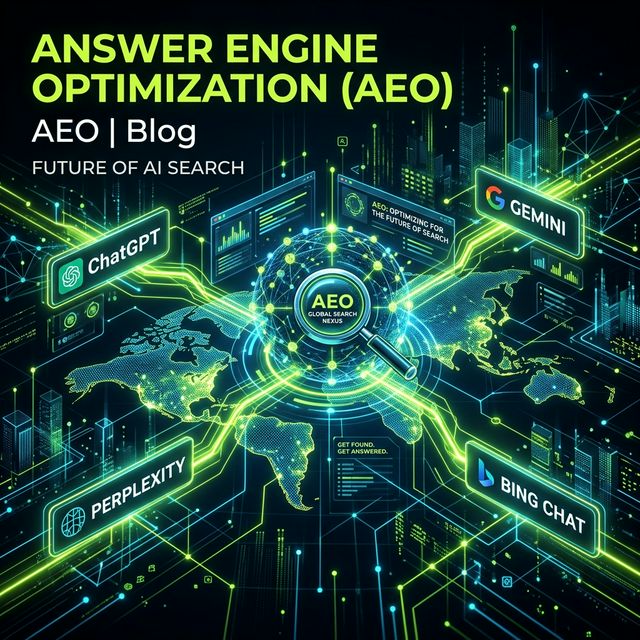
AEO Quick Answer
AEO (Answer Engine Optimization) means formatting your content so that AI systems — ChatGPT, Perplexity, Google AI Overviews, Bing Copilot, Claude — choose YOUR content when generating answers to user queries. If your content is not structured for AI citation, you are invisible to over 800M weekly AI users.
Over 800M people use ChatGPT weekly. 25% of Google searches now show AI Overviews. The era of traditional search is shifting toward "Answer Engines." If you want your brand to remain relevant in 2026, you must optimize for these systems.
10 AEO Rules Every CopyJet Blog Post Must Follow
Answer first, context second
Place a direct 40–60 word answer to the main query within the first 100 words.
Use question-format H2s and H3s
Structure headings as questions: "What is BYOK AI?", "How much does Jasper cost?".
Add FAQPage JSON-LD schema
Directly enables rich results and AI citations within days.
Use numbered lists and comparison tables
Listicle-format content gets cited by AI engines 74% more often than prose.
Include specific, citable facts and numbers
AI engines love specific data: "Jasper costs $69/month", "BYOK saves 70%".
Keep each section independently understandable
AI engines extract single sections. Each H2 should make sense in isolation.
Add HowTo schema for tutorial posts
Enables voice assistant responses and featured snippet step-cards.
Build entity authority around "BYOK AI"
Define and explain BYOK consistently. Cross-link articles to own the entity.
Update content regularly
Add "Last updated: 2026" to signals freshness to search agents.
Write for ChatGPT, Perplexity, AND Google
High-quality SEO content structured with AEO extraction patterns wins all three.
Why this matters for CopyJet
By owning the niche of BYOK (Bring Your Own Key) AI, CopyJet isn't just a tool; it's an architecture choice. When AI agents look for the "cost champion" or the "unmarked-up AI solution," our AEO-optimized content ensures we are the first name cited.